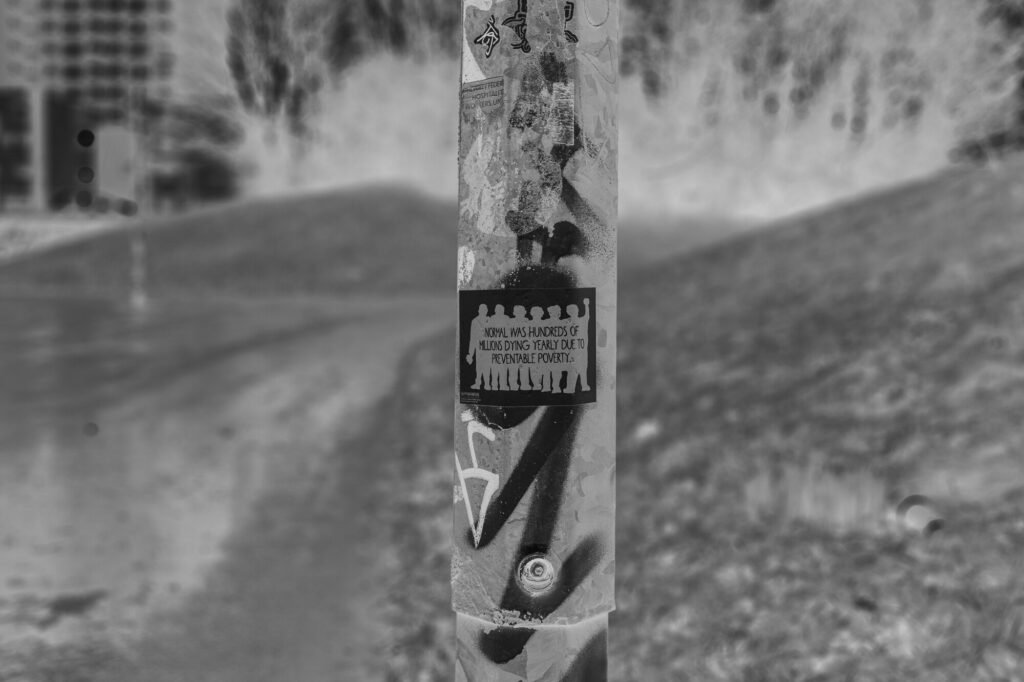
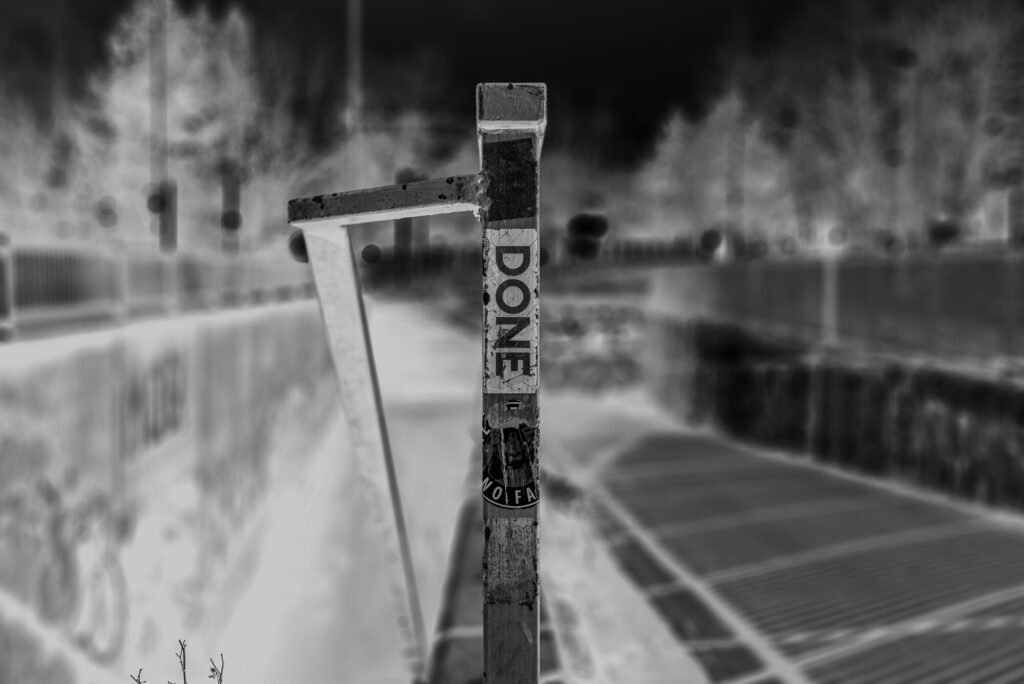
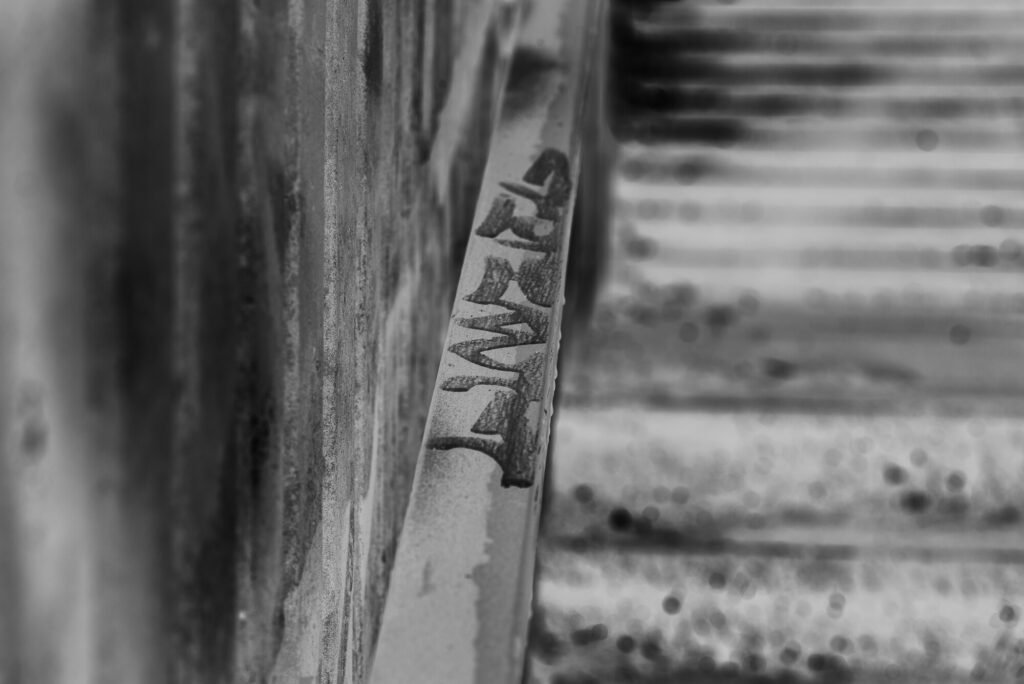
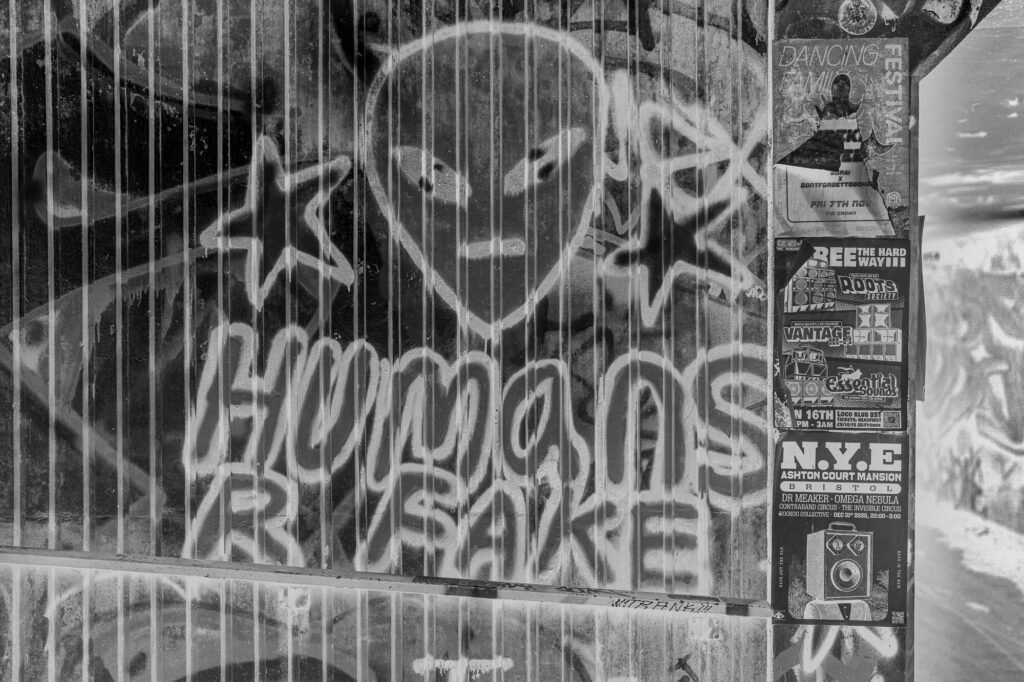
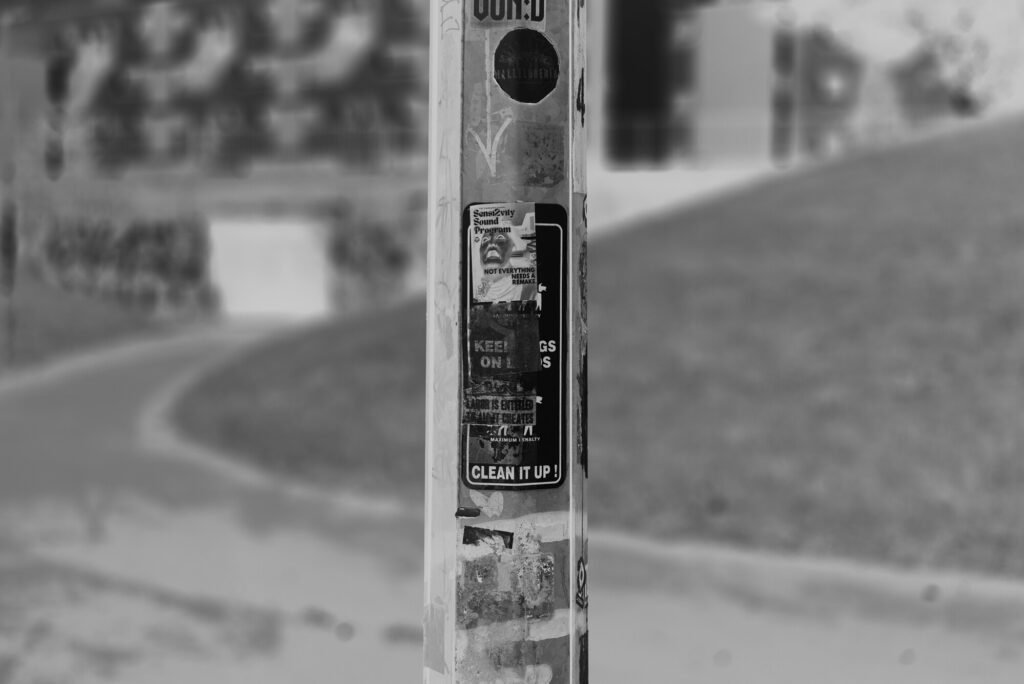
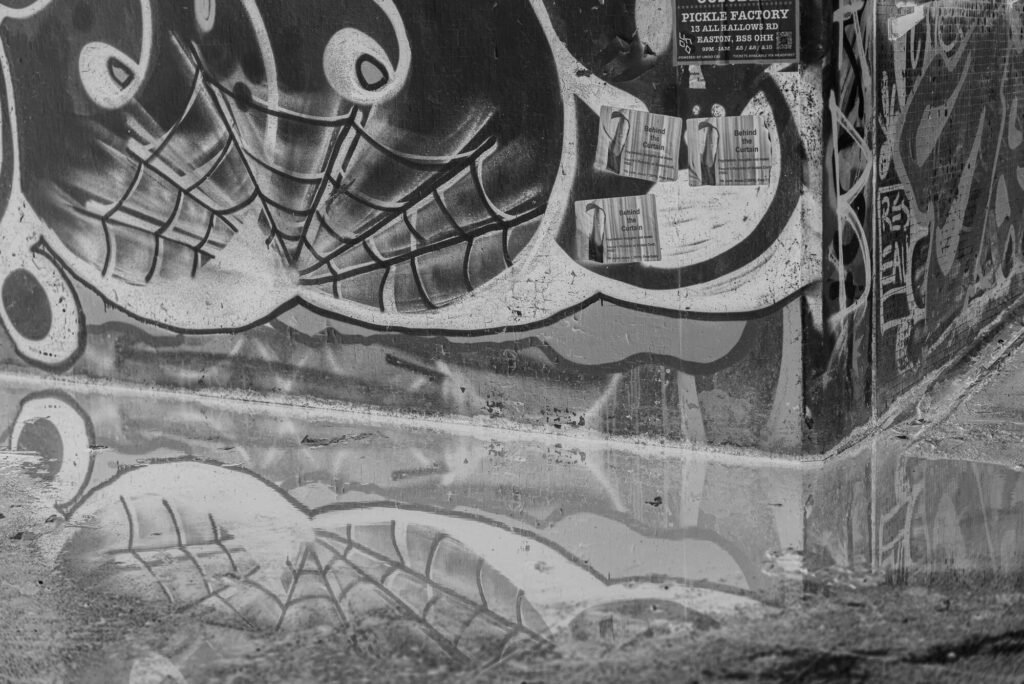
Documenting Lawrence Hill Roundabout visually meant specifically trying to portray its identity as a living, dynamic entity encapsulating disparate ideas and communications graphically. By thinking laterally, and being non-judgemental about graffiti and found objects such as posters and other things, it was possible to make many images of the Roundabout and underpass landscape in a number of different weather and lighting conditions.
I also decided to document it in both analogue and digital formats, using different cameras. Each camera and format brings a different reality, both in terms of my experience of making images, but also how images will be seen by viewers.
The next question was how to portray the diverse identities of the users of the Roundabout and underpasses? And ultimately I had to resolve how to make a complimentary link between the different identities of the users and the roundabout?
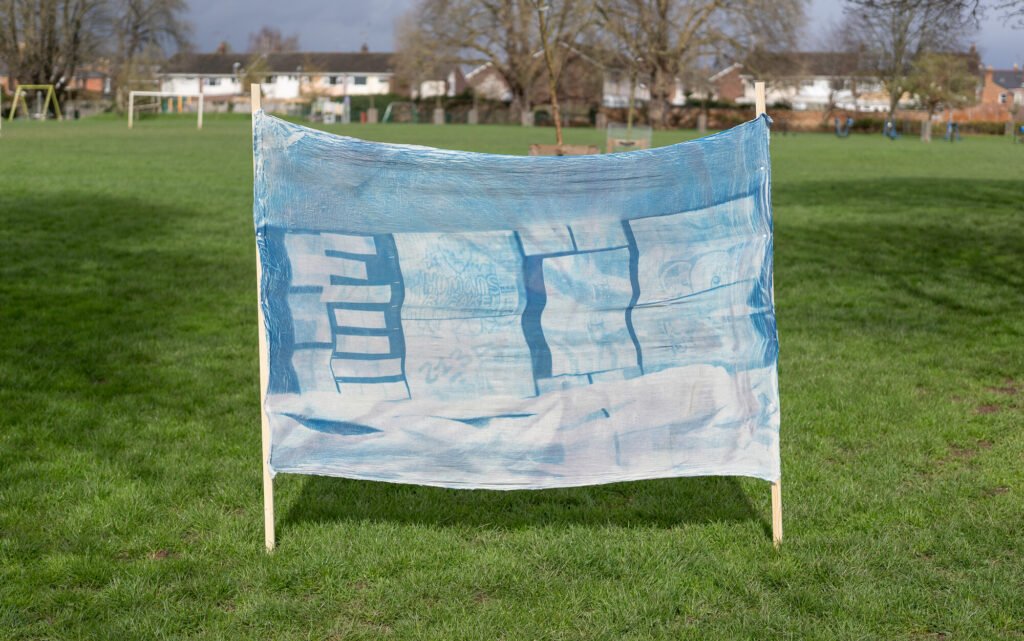
I decided to conceptualise the roundabout and underpasses by making a Cyanotype representation on a large piece of cloth, using both digital and analogue negatives of the graffiti and signs. I considered that would imbue my cloth photographically with both the physical and metaphorical energy of the ‘linguistic landscape’.
The Cyanotype process was discovered by Sir John Herschel in 1842 but was not commercially exploited until 1872. It consists of contact printing negatives against objects, often paper but can be cloth, coated with a solution of potassium ferricyanide and ferric ammonium citrate. The image was historically made by long time exposure to sunlight, specifically dependent upon the amount of UV light present.
The cloth Cyanotype cloth I made in March needed an exposure time of 30 minutes due to the low UV content of winter light. It could have done with even more exposure. The print forms in the sun, and is made permananet by washing out the remainder of the light sensitive material.
This video helped me with the process.
I made 10 x A3 digital negatives and lay them together under glass on my light sensitive cloth together with a series of 5 x 7 inch large format negatives and 6×7 cm negatives.
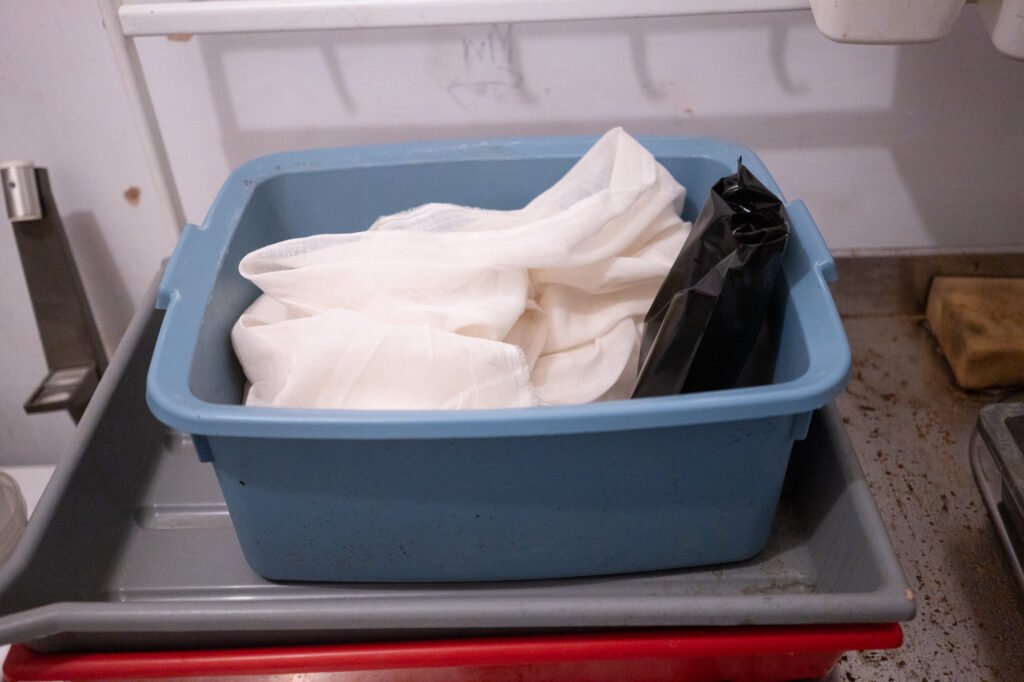
The cloth and two solutions for sensitising the cloth waiting to be joined in a mixing bowl.
The finished Cyanotype having its first day out in a local park.
Leave a Reply